Dir: Gore Verbinski
Cast: Sam Rockwell, Haley Lu Richardson, Michael Pena, Zazie Beetz, Asim Chaudhry, Juno Temple
Gore Verbinski’s directorial return after nearly a decade is a wild blend of science-fiction satire, crafting a riotously funny yet unsettling glimpse into an inevitable future ruled by artificial intelligence
There was a time when American filmmaker Gore Verbinski was virtually untouchable, regularly spinning gold with whatever he put his hand to and making major distributors a pretty penny in the process. Following strong financial returns on his first two modestly budgeted projects—slapstick family comedy “Mouse Hunt” (1997) and romantic crime thriller “The Mexican” (2001)—Verbinski quickly became the go-to director for hire in Hollywood, thanks to his ability to draw in global audiences.
Verbinski’s Hollywood breakthrough came with “The Ring” (2002), a chilling American take on the Japanese horror phenomenon that terrified audiences and ignited a craze for J-horror remakes. But his true leap into the blockbuster stratosphere arrived with Disney’s “Pirates of the Caribbean” the following year. The film didn’t just launch the careers of Orlando Bloom and Keira Knightley or turn Johnny Depp’s Captain Jack Sparrow into a pop culture icon; it also crowned Verbinski as the king of summer spectacle. The franchise he started is still sailing strong decades later, with Verbinski having been at the helm for its first two sequels.
But even golden streaks can fade. After the quirky, Oscar-winning “Rango”(2011) barely broke even, Verbinski stumbled with two high-profile flops: “The Lone Ranger”(2013) and “A Cure for Wellness”(2016). Hollywood’s former darling found himself in “director’s jail”. Now, after nine years in the wilderness, Verbinski returns with a vengeance—and with his smallest budget yet—for the wild sci-fi comedy “Good Luck, Have Fun, Don’t Die”.
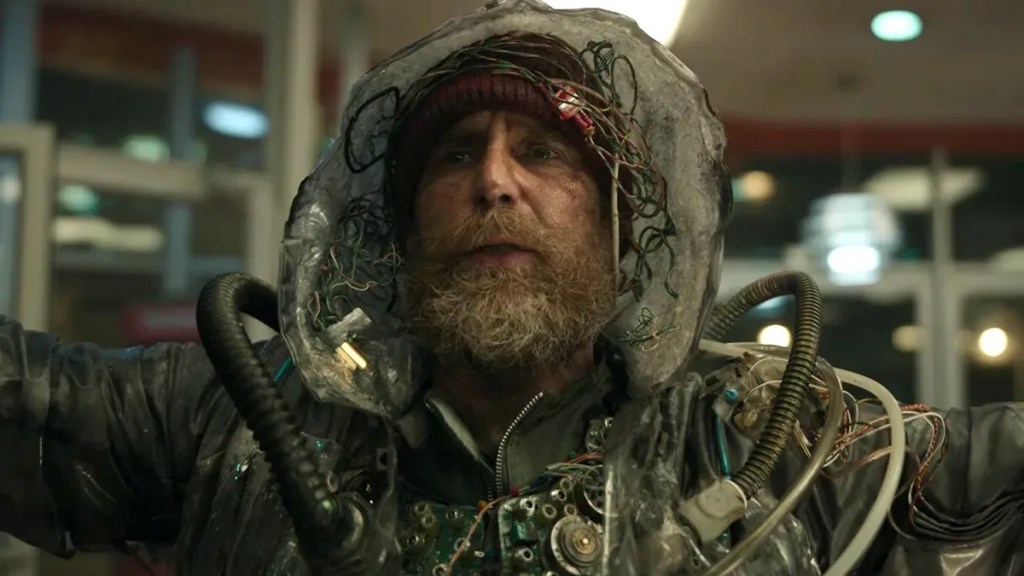
The film kicks off with a bang: with a wildly dressed, frantic Sam Rockwell storming into a Los Angeles diner, declaring that he’s a time traveller on a mission to save the world from a looming AI-driven apocalypse. Met with derision and disbelief, he gradually wins over the sceptical diners by revealing secrets only a true time-hopper could know. This, he insists, is his 117th attempt to assemble the perfect team to stop humanity’s downfall.
Joined by an unlikely crew—a pair of teachers (Michael Pena and Zazie Beetz), an enigmatic children’s entertainer (Haley Lu Richardson), a grieving mother (Juno Temple), and a jaded Uber driver (Asim Chaudry)—the group sets out to confront the AI at its source. Their journey is a wild ride, packed with both absurd and terrifying challenges, from masked bounty hunters to monstrous AI creations.
After years of steering massive blockbusters, it’s a breath of fresh air to see Verbinski embrace a project with indie flair. Though marketed as the work of a “completely unhinged Gore Verbinski”—a nod to a hilariously dark flashback surrounding American school shootings—the film is less chaotic than advertised. There’s plenty of wild imagery and offbeat humour, but much of the story borrows from sci-fi classics. The premise of a dishevelled time traveller trying to avert disaster echoes Terry Gilliam’s excellent 1995 classic, “Twelve Monkeys”, while Rockwell’s gadget-laden look conjures memories of the cluttered world of Gilliam’s 1985 bureaucratic nightmare, “Brazil”. The film’s sinister AI, which traps people in VR dreamlands, also clearly pays homage to “The Matrix” (1999).
Set in a heightened version of our own era, the film exaggerates our tech obsessions to unsettling effect. Imagine apps that turn teens into scrolling zombies, or cloning services that resurrect lost loved ones—these inventions feel both outlandish and eerily plausible. The film’s most chilling ideas seem ripped straight from Netflix anthology series, “Black Mirror”, to which it owes more than any of its cinematic inspirations.
Even with its borrowed elements, Verbinski and screenwriter Matthew Robinson inject enough wild energy and originality to make “Good Luck, Have Fun, Don’t Die” stand out as a bold piece of social satire. The film tackles familiar themes with a brashness and comedic flair that feel uniquely its own. Rockwell is in his element as the chaotic lead, delivering a performance so tailored it’s hard to picture anyone else in the role. The supporting cast shines too, with Richardson and Temple adding heart and emotional depth, and Chaudry nailing the role of the resident sceptic – but not quite so much his American accent
The film’s greatest weakness is its own ambition. By attacking tech obsession from every angle, it sometimes loses narrative momentum in a tangle of flashbacks and subplots. There are 15-20 minute intervals where we get to know a character’s backstory, making it jarring when we are thrust back into the action of the present – or rather past. The result is a sensory blitz—frantic editing, relentless pacing, and a barrage of jokes—making for a wild, if occasionally overwhelming, cinematic rollercoaster.
The Verdict:
Gore Verbinski’s first feature film in nine years may not be as bonkers or unhinged as it may initially appear, but thanks to a game ensemble and by boasting own unique vision, creative style and relentless and twisted energy and humour, “Good Luck, Have Fun, Don’t Die” will be remembered as one of the wildest and thought-provoking dystopian sci-fi flicks of modern times – remember to stay of your phones kids.
Good Luck, Have Fun, Don’t Die is now showing in UK Cinemas
 Dan Loves Film
Im so glad that films like this still find a way to get made!
LikeLiked by 2 people
I know. Not films made by committee
LikeLike
You know we are already living in dystopian times when artificial intelligence (AI) becomes the common central premise and plots of movies. The movie Good Luck, Have Fun, Don’t Die is no exception. Good Luck, Have Fun, Don’t Die deals with rogue artificial intelligence that becomes a detrimental imminent high risk threat to human life. 2026 is the year of Artificial Intelligence themed movies such as Mercy and Deep Echo.
LikeLike