Dir: Spike Lee
Cast: Denzel Washington, Jeffrey Wright, Ilfenesh Hadera, ASAP Rocky, Ice Spice, Frederick Weller, Dean Winters, John Douglas Thompson, Aubrey Joseph, Wendell Pierce
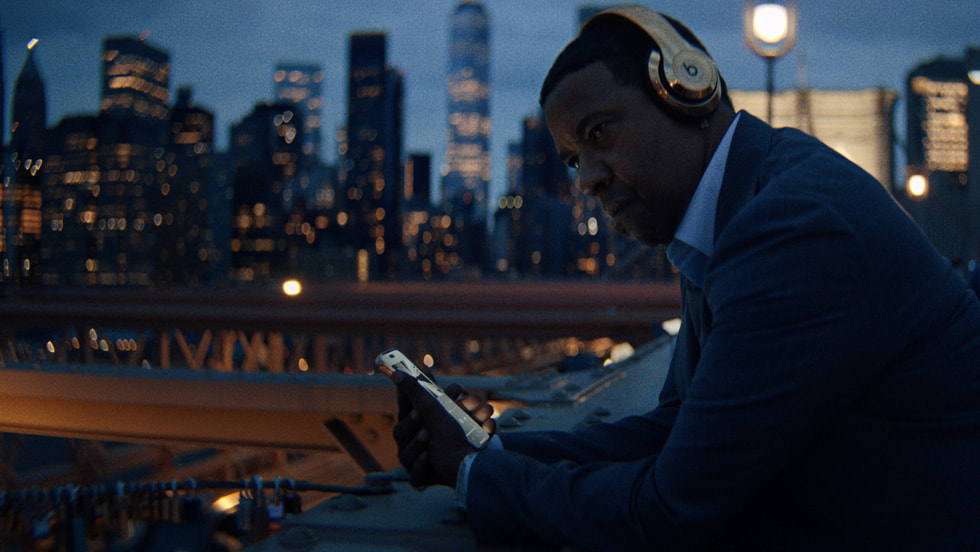
Despite Spike Lee’s bold stylistic flourishes in this jazz-infused spin on a Kurosawa classic, his latest joint stumbles with erratic pacing and a distracting upbeat soundtrack that drains away any sense of peril
For more than forty years, Spike Lee has blazed a trail as one of the most influential and outspoken African American filmmakers in Hollywood. His prolific body of work has tackled cultural change, race relations, and urban crime, inspiring a new generation of filmmakers while he continues to deliver projects that challenge and provoke. Never one to shy away from controversy, the 68-year-old has openly criticized the industry and those within it, earning both admirers and adversaries. Yet Lee’s impact is undeniable, with films like “Do the Right Thing” (1989), “Malcolm X” (1992), “25th Hour” (2002), and “BlacKkKlansman” (2018) standing as powerful, unflinching explorations of American society and African-American subculture.
With his latest joint, Lee sets out to honour one of cinema’s true visionaries: Akira Kurosawa. Over the span of six decades and thirty films, Kurosawa redefined the art of filmmaking, leaving behind a legacy of bold innovation and hands-on mastery. His classics—“Ikiru” (1952), “Seven Samurai” (1954), “Yojimbo” (1961), and “Ran” (1985)—remain touchstones for filmmakers worldwide. Now, Lee turns his attention to Kurosawa’s 1963 thriller “High and Low”, marking his second remake of a celebrated Asian film after his critically panned take on Park Chan-wook’s “Oldboy”. Lee looks to breathe new life into Kurosawa’s police procedural by shifting the action from 1960s Yokohama to the vibrant streets of modern-day Brooklyn.
The A24 film made its debut out of competition at the 78th Cannes Film Festival in May, followed by a limited theatrical run, before being released on Apple TV+ on September 5th. Originally penned by screenwriter Alan Ford before the COVID-19 pandemic, the project lingered in pre-production for years. It finally gained momentum when Lee began reworking the script after Denzel Washington, a longtime collaborator, signed on to star. This film marks the pair’s fifth collaboration and their first reunion in nearly two decades, since “Inside Man” in 2006.
Washington takes on the role of David King, a legendary music mogul, considered to have the “best ears in the business” and the visionary founder of Stackin’ Hits Records. Having previously sold his majority stake, King is determined to reclaim his company and block a takeover by a rival label he fears will abandon his mission to uplift young African-American artists. To gather the funds, King risks nearly everything he owns, including his luxurious Dumbo penthouse with sweeping vistas of the Brooklyn Bridge, which concerns his wife, Pam (Ilfenesh Hadera).
On the day the deal is set to close, King receives an anonymous call from a kidnapper demanding $17.5 million for the safe return of his son, Trey (Aubrey Joseph). After alerting the police, King does not hesitate to agree to the ransom, even though it could cost him his chance to reclaim his company. However, Trey is soon found unharmed, with the kidnapper having mistakenly abducted Kyle (Elijah Wright), Trey’s best friend and the son of King’s trusted driver and confidant, Paul (Jeffrey Wright). With the ransom demand still looming, King hesitates, torn between saving his business and risking his bond with Paul and his family.
Like many, I was not only disappointed but also almost insulted by Lee’s 2013 retelling of “Oldboy”, which felt like a chaotic misfire given the revered source material. This time, Lee fares better in his quest to bridge the gap between Asian cinema and Western audiences, yet the film still stumbles in its translation of Kurosawa’s original masterpiece. What cannot be denied is Lee’s unmistakable visual bravado. His signature experimental energy pulses through the film, blending seamlessly with Matthew Libatique’s jazzy-soaked cinematography. The hallmarks are all present, from inventive scene transitions to those bold, front-facing dolly zooms. Without Lee’s audacious direction and Denzel’s magnetic presence, “Highest 2 Lowest” would have been a dull and instantly forgettable experience.
At just over two hours, the film lingers in its opening act, with the kidnapper’s pivotal call arriving a full thirty minutes in. After that, the movie veers wildly in tone and stumbles in pacing, weaving between the polished calm of the King penthouse and what should be pulse-pounding action aboard racing subway trains. Yet, everything unfolds to the same steady beat, no matter how high the stakes climb. The biggest issue I found was with Howard Drossin‘s score. His jazzy reinterpretation of Kurosawa’s music is a perfect fit for King’s intimate, domestic moments, but it jars during the film’s high-octane confrontations, draining the tension from scenes that should have you on the edge of your seat. The mismatch was so distracting that it nearly pulled me out of the film, had it not been for Washington’s reliably stellar performance.
The two-time Oscar winner treads a delicate path as King, capturing both the magnetic charm and the sharp arrogance of a celebrated music mogul. He manages to reveal King’s selfish, money-driven side without ever making him unlikable. While this may not be the crowning achievement of his storied career, Washington delivers a sensational performance, wringing depth and nuance from a script that offers him precious little in this unexpectedly shallow and thematically muddled reimagining of a Japanese classic.
The Verdict:
Spike Lee unleashes his signature creative flair, once again drawing a magnetic performance from Denzel Washington at the film’s heart. The idea of reimagining a legendary Asian classic in the pulse of modern New York sounds promising, but Lee stumbles with muddled messaging and sluggish pacing, leaving the music-driven thriller feeling lifeless and uninspired.
Highest 2 Lowest is now available to stream on Apple TV+
 Dan Loves Film
Leave a comment