
Dir: Jafar Panahi
Cast: Vahid Mobasseri, Mariam Afshari, Ebrahim Azizi, Hadis Pakbaten, Majid Panahi, Mohamad Ali Elyasmehr, Delnaz Najafi, Afssaneh Najmabadi, Georges Hashemzadeh
The very existence of this Iranian drama feels like a triumph in itself, and though its gradually mounting tension might challenge some viewers, those who stay the course will witness one of the most unforgettable cinematic climaxes in recent memory
Filmmaking, at its core, is meant not just to entertain but to illuminate the pressing political and social issues of our time. Yet, this deeper purpose has faded from the mainstream, drowned out by a flood of Hollywood blockbusters, endless remakes, and recycled adaptations. Studio giants like Disney and, to an extent, Netflix—now in the process of acquiring Warner Bros.—often meddle in the creative process, leaving only a handful of films each year that dare to speak with a unique, thought-provoking voice. While I still cherish the thrill of pure escapism and will gladly support mindless blockbusters if it means keeping the industry and cinemas alive, this trend has left us with a shortage of true auteurs: filmmakers bold enough to confront challenging, timely themes head-on.
Few filmmakers embody the transformative power of cinema quite like Iranian director Jafar Panahi, whose unwavering dedication has shaped Iranian cinema since the 1979 revolution. Over the past three decades, Panahi has crafted a body of work that boldly critiques the Iranian regime, shining a light on oppressive social structures and the country’s much-condemned gender politics. Unsurprisingly, his fearless storytelling has repeatedly put him at odds with the authorities, especially since his 2000 film “The Circle” spotlighted the plight of women in Iran. His works, coupled with his commitment to free speech and activism, led to a 2010 six-year prison sentence and a 20-year filmmaking ban. Yet Panahi’s resilience proved unbreakable as he continued to make films in secret, including the aptly titled autobiographical documentary “This Is Not a Film” in 2011, which famously premiered at the Cannes Film Festival after being smuggled out on a USB stick.
In 2022, Panahi was arrested once again, sparking international outrage. After a hunger strike and seven months behind bars, he was released in early 2023. Undeterred, Panahi threw himself into his latest project, “It Was Just an Accident”, secretly self-producing the film with support from both the French and Luxembourg film industries. True to form, the film premiered in competition at Cannes, marking Panahi’s first appearance at the festival in two decades. The film quickly captured the world’s attention, winning the prestigious Palme d’Or and emerging as a major award season contender, with both the film and Panahi looking likely to land Best Picture and Best Director nominations at the upcoming 98th Academy Awards.
I finally caught a screening of the film last weekend after its long-awaited UK release on December 5th, and while its strong Iranian themes might not appeal to every casual viewer, the sheer audacity and artistry behind its creation make it a cinematic triumph—worth seeing simply because it exists at all.
The film’s pivotal accident unfolds when a seemingly ordinary man, driving at night with his pregnant wife and young daughter, fatally strikes a wild dog. Seeking repairs, he stops at a nearby garage, where the Azerbaijani auto-mechanic Vahid(Vahid Mobasseri) is visibly unsettled by the sound of the man’s prosthetic leg. Driven by a mysterious compulsion, Vahid follows the man home and kidnaps him the next day. Deep in the desert, as he prepares to bury his captive alive, Vahid reveals that he believes the man is actually Eghbal (Ebrahim Azizi), the very person who once tormented and tortured him in an Iranian prison.
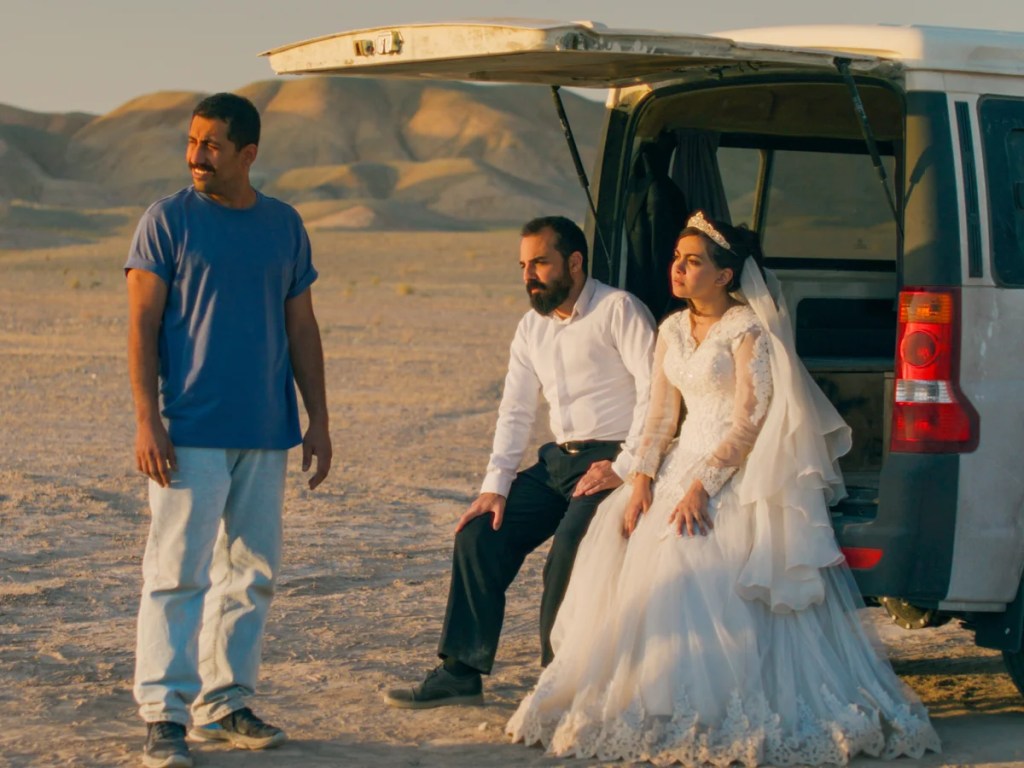
Haunted by uncertainty after the man’s desperate pleas, Vahid loads his unconscious captive into a van and gathers others from the nearby community who also suffered at Eghbal’s hands: the photographer Shiva (Mariam Afshari), the soon-to-be-married couple Goli (Hadis Pakbaten) and Ali (Majid Panahi), and Shiva’s hot-headed former partner Hamid (Mohamad Ali Elyasmehr). As the group wrestles with doubt—as none of them ever saw Eghbal’s face, having been blindfolded in prison—they argue over the man’s fate, torn between seeking a confession and deciding whether to exact revenge or show mercy.
Panahi has never shied away from politics, but his latest film feels like his boldest and most personal statement yet. Echoing his own story, the narrative follows a mismatched group of everyday people, each scarred by the Iranian government, as they navigate a nation thick with suspicion. Years after their suffering, these characters are still willing to risk everything for a shot at vengeance against the regime that shattered their lives. Vahid, having lost both his freedom and his wife to imprisonment, throws himself into the kidnapping plot with little left to lose. The emotional core, though, belongs to Goli and Ali. On the eve of their wedding, already dressed for the celebration, they instead gamble their future so Goli can confront the trauma inflicted by Eghbal. Ali, raised in comfort and unable to fully relate to the others, often clashes with the hot-tempered Hamid, yet stands by his fiancé, even as the stakes spiral.
Panahi’s signature neorealism brings unexpected humour to the film, as each new passenger Vahid collects turns the journey increasingly absurd. The group’s constant squabbling, run-ins with bribe-hungry officers, and encounters with hospital staff who expect gifts inject a chaotic authenticity into the story. Filming in secret on Iranian streets, Amin Jafari’s cinematography captures the city’s frantic energy and the desert’s calm beauty, whilst also mirroring the risks of the underground filmmaking tactics utilised during production and the group’s covert kidnapping mission.
The story itself has its ups and downs, opening with a gripping mystery as viewers puzzle over Vahid’s motives as he takes a seemingly innocent man from his wife and child. While the repetitive debates and moral quandaries amongst the characters can drag, the cast’s chemistry keeps the journey compelling, and the payoff is extraordinary. While a handful of people walked out of my screening, those who stuck through the slightly saggy second act were rewarded with a single-shot climax that personally left me breathless, its intensity still lingering now, days later. Bathed in the van’s red tail lights, the scene zeroes in on the captive as he sows doubt, while Shiva and Vahid press for the truth. This is not just a showcase for the actors and Panahi’s writing skills, but a powerful meditation on trauma and the endless cycle of revenge and justice that haunts the film from start to finish.
The Verdict:
The film’s bold political themes might feel overwhelming or distant to some viewers, and its second act loses momentum with repetition. Yet, the raw energy and fearless vision on display are unmatched. Panahi stands as a true cinematic powerhouse, undeterred by clashes with Iranian authorities, and remains a vibrant, courageous voice in world cinema.
It Was Just an Accident is now showing UK Cinemas
 Dan Loves Film
Leave a comment