Dir: John Patton Ford
Cast: Glen Powell, Margaret Qualley, Jessica Henwick, Bill Camp, Zach Woods, Topher Grace, Ed Harris
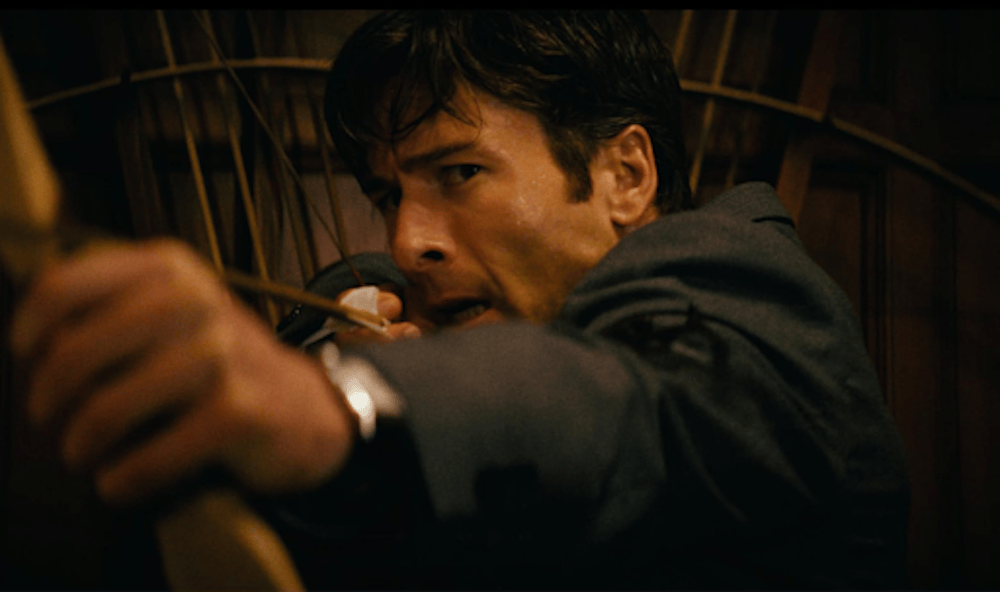
Glen Powell’s effortless charisma draws you in from start to finish, but despite some moderate fun, this remake of an Ealing classic stumbles with its wavering tone and timid script that never quite takes any real risks
“How to Make a Killing” gives Hollywood’s modern golden boy, Glen Powell, another chance to dazzle with his effortless charm. Though the film spins a modern yarn of murder and greed, its roots stretch back to 1949 and the legendary Ealing Studios caper, “Kind Hearts and Coronets”. That British classic famously saw Alec Guinness masterfully embodying a string of doomed aristocrats, each falling victim to Dennis Price’s cunning antihero on his ruthless quest for a stolen Dukedom.
Trading Edwardian England for the hustle and bustle of modern New York, “How to Make a Killing” sticks closely to the blueprint Robert Hamer and Ealing laid down over seventy years ago. John Patton Ford’s script lingered in Hollywood limbo for years, gathering dust on the coveted Black List since 2014, until the critical success of his directorial debut, “Emily the Criminal” (2022), gave him the clout to bring it to life himself. After a carousel of working titles, the film finally emerged as “How to Make a Killing”, officially announced in November 2025, having been acquired for US distribution by A24.
Much like its 1949 predecessor, “How to Make a Killing” unfolds through the eyes of its protagonist, who narrates his story from a prison cell as the clock ticks down to his execution. Instead of the aristocratic Duke, we meet Becket Redfellow (Glen Powell), polished and sharp, confessing his tale to a visiting priest. Becket’s backstory is one of exile and longing: his mother cast out by the Redfellow clan for her teenage pregnancy, yet determined to raise her son with a taste for life’s luxuries. As a young man, Becket falls under the spell of the affluent Julia Steinway (Margaret Qualley), setting the stage for his fateful journey.
Years later, a chance meeting with a now-married Julia and a humiliating demotion from his job as a suit salesman push Becket over the edge. Fuelled by resentment and ambition, he hatches a plan to systematically remove the remaining Redfellows, determined to seize the family fortune and avenge the wrongs done to him and his mother.
It only takes a single Glen Powell performance to understand his magnetic appeal. With his effortless charm and striking looks, he commands the screen like few others in Hollywood today. Here, Powell’s charisma is the film’s saving grace, injecting life into an otherwise lacklustre remake of a sharp British classic. He single-handedly carries the story, making it a delight to watch his morally ambiguous hero stumble from bumbling amateur to polished assassin, dispatching relatives with a wink and a grin.
The film’s dark humour and satirical jabs land a few laughs, but its featherweight tone and inability to match the original’s bite kept reminding me of the Coen Brothers’ ill-fated remake of “The Ladykillers” two decades ago. Like the Coens, Ford flirts with razor-sharp satire but ultimately shies away from truly skewering the ultra-rich and their scandalous lifestyles. Through Becket’s run-ins with the Redfellows, we glimpse a parade of entitled heirs and dubious professionals, from his spoiled, wannabe-playboy cousin Tayler (Raff Law) to Topher Grace’s controversial, headline-grabbing religious figure, Steven.
Not every Redfellow gets enough screen time to make their downfall satisfying, but a few are allowed moments of vulnerability and even redemption. These unexpected turns force Becket to reconsider his deadly mission, especially as his romance with Ruth (Jessica Henwick) blossoms. Just as Becket seems to have it all—a cushy Wall Street job, a devoted partner, and a taste of the high life—greed lures him back, and his relentless pursuit of the family patriarch, Whitelaw Goodfellow (Ed Harris), brings about his undoing.
With “eat-the-rich” satires now a staple thanks to hits like “The White Lotus”, “Parasite” (2019), and “The Menu” (2022), the film’s gentle ribbing of the elite feels especially tame. The story also wavers between dark comedy and thriller, never quite committing to either. This indecision drains the tension, making it tough to care about Becket’s clumsy foray into murder, especially as he stumbles through his first attempts with little skill or conviction.
Becket’s cool, almost detached narration saps the story of suspense, even as his execution looms. The film leans so heavily on his voiceover that the humour and satire are pushed to the side-lines for long stretches. Still, there’s some fun to be found—while the film treads familiar ground and its satire feels muted, Powell’s performance delivers a handful of sly, well-timed laughs.
This film might not spark a new wave of Ealing Studios fans, but its lively premise could nudge curious viewers toward the far superior “Kind Hearts and Coronets”. Even if this outing feels like a misstep for John Patton Ford, I’m still hopeful he’ll return with the kind of gripping thrillers and biting black comedies promised by his debut, “Emily the Criminal”.
The Verdict:
“How to Make a Killing” never quite reaches the lofty heights of its revered source material, but despite its uneven tone and gentle satire, the film still delivers a light-hearted, enjoyable ride, buoyed by Glen Powell’s undeniable charisma.
How to Make a Killing is now showing in UK Cinemas
 Dan Loves Film
Interesting read.
LikeLiked by 2 people