Dir: Jane Schoenbrun
Cast: Hannah Einbinder, Gillian Anderson, Jack Haven, Patrick Fischler, Arthur Conti, Eva Victor, Zach Cherry
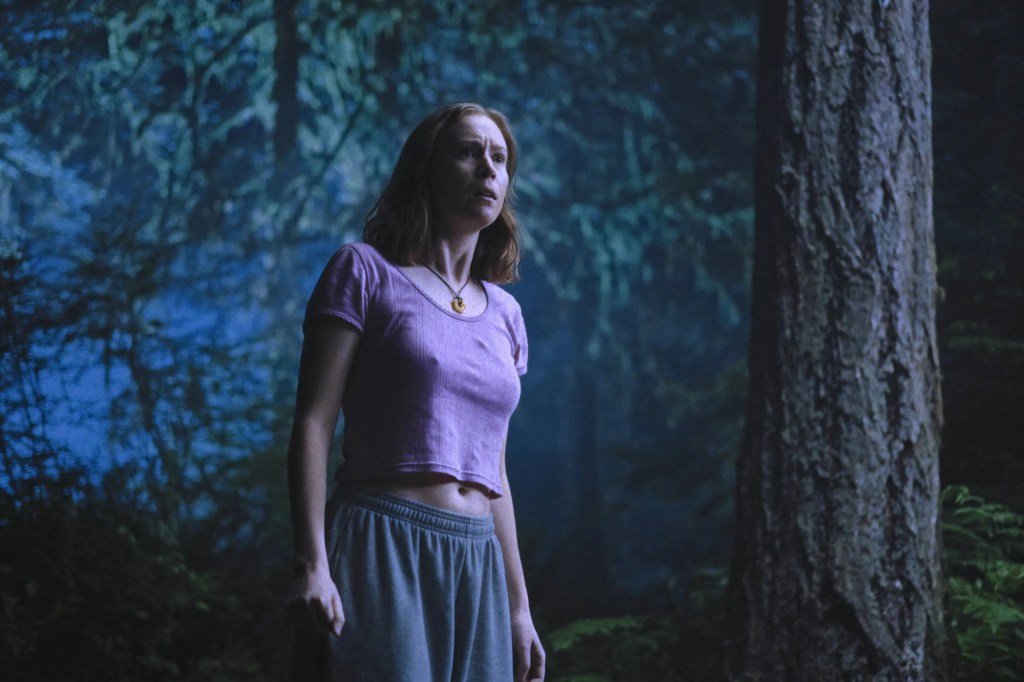
I admire Schoenbrun’s sharp exploration of gender and sex tropes in horror films, and this meta-slasher dazzles with its striking visuals, yet I found myself drawn more to the eerie atmosphere and lingering ambiguity of their earlier work
Is there any filmmaker working today who embodies the rift between critics and audiences quite like Jane Schoenbrun? Ambitious and unapologetically divisive, Schoenbrun has become a darling of the critical set thanks to psychological horror films like “We’re All Going to the World’s Fair” (2021) and “I Saw the TV Glow” (2024). Their bold explorations of dysphoria and gender identity have placed them at the cutting edge of contemporary LGBTQ+ cinema. Yet, while critics shower them with praise and indie awards, everyday moviegoers remain unconvinced. Schoenbrun’s intricate themes and ambiguous storytelling often leave viewers scratching their heads, and the deliberately slow-burning dread that defines their work is just as likely to be dismissed as boring or alienating.
Even I find myself torn by the 39-year-old’s approach to filmmaking. I admire their daring visuals, their fearless dive into queer identity and the complexities of gender and sexuality, and above all, their knack for conjuring a creeping sense of unease. Yet, after past screenings, I have often left feeling emotionally short-changed, as if the resolution slipped just out of reach. Still, the promise in Schoenbrun’s work was enough to get me excited for their latest and third feature, the fittingly titled “Teenage Sex and Death at Camp Miasma”.
After Schoenbrun described the film as both funny and grisly in a 2024 New Yorker interview, anticipation for their latest horror offering soared. By the time it premiered at the 2026 Cannes Film Festival, it was one of the hottest tickets, ultimately nabbing the Queer Palm and, like their previous films, earning near-universal critical acclaim. With its slasher setup and all the buzz, I expected this to be Schoenbrun’s most approachable film yet. Having caught it in UK cinemas last week, I can confirm it is—though it still manages to be just as confounding and, for some, unrewarding.
The film follows Kris (Hannah Einbinder), a young indie filmmaker whose Sundance triumph, LGBTQ+ identity, and outsider status mirror Schoenbrun’s own. Kris is tapped to direct a reboot of the long-running fictional slasher series “Camp Miasma”. Though she knows her job is to update the franchise’s problematic, transphobic roots for a new era, her connection to the series runs deep, shaped by childhood memories. She becomes fixated on casting Billy Presley (Gillian Anderson), a reclusive actress who vanished from the spotlight after starring in the original “Camp Miasma” in the 1980s. Kris tracks Billy down to her secluded home, which turns out to be the abandoned campgrounds where the films were shot, hoping to lure her back for the revival.
As Kris and Billy bond over their shared nostalgia and personal ties to the original film, reality and fantasy start to bleed together. The film’s transgender killer Little Death (Jack Haven) seems to crawl straight from a surreal, fleshy chasm at the lake’s bottom, stalking both women as if summoned by their memories and sexual awakening.
If you had told me after seeing “I Saw the TV Glow” that Jane Schoenbrun would tackle a slasher, this is exactly what I would have pictured. The fictional “Camp Miasma” films are packed with classic summer camp slasher tropes, nodding to classic genre titles like “Friday the 13th” and especially “Sleepaway Camp” with its notorious transphobic legacy. The main story, following Kris’s journey of self-discovery and sexual awakening, is unmistakably Schoenbrun: visually distinct, steeped in queer themes, and sharply critical of media’s treatment of women. Where their earlier films dissected the internet and TV, here they turn nostalgia for physical media into a scalpel, slicing into society’s attitudes toward the trans community. The film’s love letter to 80s horror is vivid, with stylized VHS grain, cartoonish violence, and blood geysers galore. The boundary between the “Camp Miasma” films and reality blurs further through lushly painted backdrops, transforming the abandoned, snow-dusted Pacific Northwest campgrounds into a dreamscape.
What caught me off guard was how much clearer the film’s themes are compared to Schoenbrun’s earlier work. While Einbinder’s film-savvy protagonist sometimes leans too heavily on exposition, unpacking her trauma, queer identity, and sexual liberation, for once I felt I truly grasped Schoenbrun’s social commentary. This is also Schoenbrun’s funniest film yet, gleefully skewering slasher clichés with tongue-in-cheek violence and cringeworthy sexist dialogue that, while outdated now, was once a genre staple. The film also takes sharp aim at the modern horror industry, lampooning Kris’s team and studio execs who chase profits regardless of a franchise’s problematic past, even tossing in sly jabs at Jason Blum and his recent “Halloween” revival.
Where the film lost me was with its two leads. Einbinder and Anderson both give strong performances—Anderson especially, channelling a Norma Desmond-like recluse—but I struggled to connect with either character. Kris, in particular, feels overintellectualized and self-indulgent, serving as a thinly veiled stand-in for Schoenbrun. I usually love meta-commentary in horror, especially when it’s as sharp as in the earlier “Scream” films, but when it’s spelled out so plainly, it starts to overshadow the story and stifle character development. I respect Schoenbrun’s attempt to reach a wider audience by dialling back the bewilderment, but the commentary this time is almost too obvious. Ironically, while the film is more accessible, I miss the ambiguity and uncertainty of their earlier work. Kris is very much a product of the “modern” generation, which gives slasher culture a fresh update, but older viewers may find her—and the film—cold and tightly wound, deepening the generational divide between Gen Z and fans of classic slashers.
It is certainly an intriguing and thought-provoking film, but for me, it lands squarely in the “glad I saw it, but won’t revisit” category. Schoenbrun’s promise as a filmmaker is undeniable, and I hope their next project branches out thematically to draw in a broader audience—one that might, in turn, discover and embrace their earlier work with greater enthusiasm.
Teenage Sex and Death at Camp Miasma is now showing in UK Cinemas
 Dan Loves Film
Leave a comment